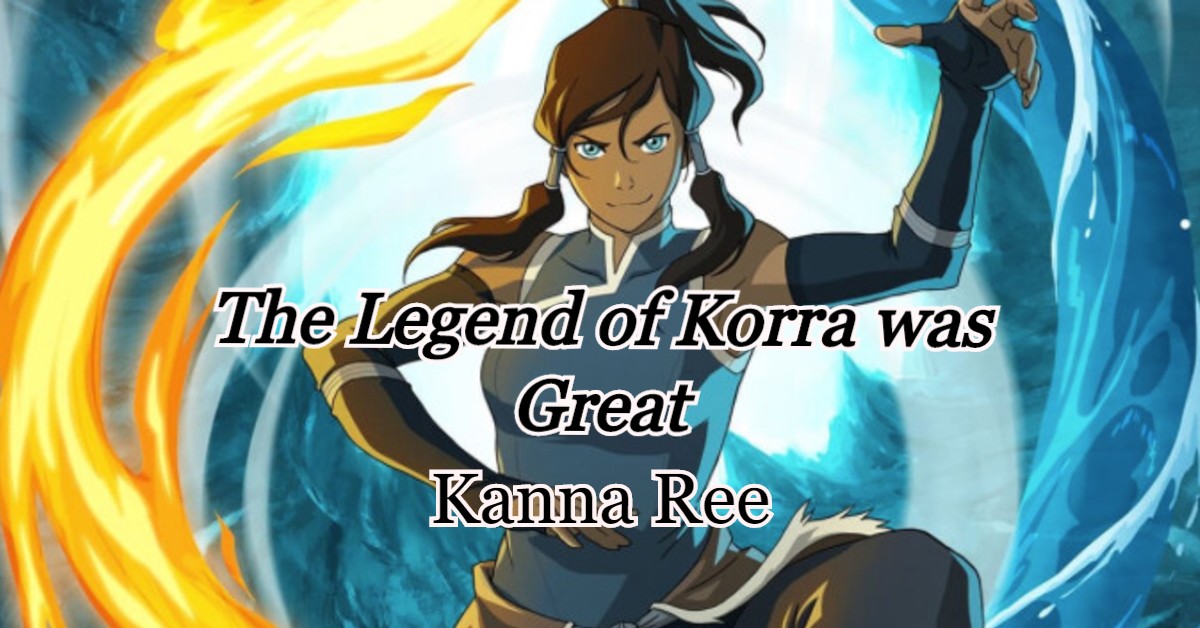
If you’ve been on the Internet in the last month, then you’ve seen the general, widespread excitement about Avatar: The Last Airbender (ATLA). If you’ve continued to be on the Internet (and let’s be honest, very few of us have left the web), then you would’ve seen both the excitement and apprehension when Netflix announced that they were releasing it’s sequel, Avatar: The Legend of Korra (TLOK) next.
First off, a little background of the show:
Taking place 70 years after the events of “Avatar: The Last Airbender,” this story follows the adventures of the Avatar after Aang – a passionate, rebellious, and fearless teenage girl from the Southern Water Tribe named Korra. With three of the four elements under her belt (Earth, Water, and Fire), Korra seeks to master the final element, Air. Her quest leads her to the epicenter of the modern “Avatar” world, Republic City – a metropolis that is fueled by steampunk technology. It is a virtual melting pot where benders and non-benders from all nations live and thrive. However, Korra discovers that Republic City is plagued by crime as well as a growing anti-bending revolution that threatens to rip it apart. Under the tutelage of Aang’s son, Tenzin, Korra begins her airbending training while dealing with the dangers at large.
IMDb, The Legend of Korra
Now, when ATLA first ended after a spectacular series finale, fans were generally excited about what was to come in the next installment. I remember learning that the next Avatar would be a woman, that she would be so different from Aang, and I was excited about that! A new Avatar, new perspective, all that jazz.
But then the show came.
The one bad thing about debuting a sequel to an already popular show is that people will always, always, always compare it to the original. Avatar: The Legend of Korra had the exact same treatment.
For one, people didn’t like Korra. They didn’t like that she was so different from Aang, that she was impulsive and brash and everything that Aang wasn’t. But that was the point. The only thing that Korra, the titular character, shared with Aang was the fact that she was the Avatar and that some of the old characters appeared sporadically to give Korra some insight.
As the show went on, it was plagued with more issues: each book, or season, of the show was it’s own, contained story that went within the overarching storyline of Korra finding herself and people didn’t like that format; the crew within the show didn’t know how long TLOK was going to last; Nickelodeon kept sabotaging the production; and, finally, the last couple of seasons of TLOK were placed online, making it harder for viewers to access the show.
Here’s this really well-written (but long) article about The Legend of Korra that may help you guys understand the show better and everything that it went through. Be careful, though, because the article is mired with spoilers.
And, more than that, though the show had it’s flaws, everyone was comparing it to ATLA. It makes sense, right, to judge a show based on its predecessor, but Korra was an entirely new character and she didn’t deserve a majority of the hate that she got. Korra was not Aang and many people were not willing to be open-minded and look into a new interpretation of the beloved Avatar. People were nit-picky and couldn’t enjoy that we were given another glimpse into the world of Avatar and the issues others may face.
And get this: a lot of the decisions that Korra made throughout the series definitely weren’t decisions that Aang would have made. While Aang had to work through his grief of the lost of his entire race, the pressure of saving the world, and navigating how to best defeat the big boss the series was leading towards, Korra had more internal problems to work with, people telling her how she should be and what she should do, and a world that felt that they had no need for an Avatar. Korra also had to deal with the mounting trauma that she went through each season, and how she had “failed” a lot throughout the series.
Avatar: The Last Airbender was innovative and wonderful and funny in a lot of ways, but it was also much more lighthearted and the stakes weren’t as frequently in your face. This is not to diminish the original series, though! It’s just that every issue within Avatar: The Legend of Korra was much more focused and Korra had to struggle with knowing who she was, losing herself, and then finding herself again. Aang never had to struggle with that.
Also, I don’t think that the world (specifically in 2012) was ready for a woman like Korra. She was truly ahead of her time, and while the series could’ve been better, I love her for the growth that she constantly experiences and what she means to others who love her.
For resources and ways to donate while protests continue, while people need saving, and even beyond: https://blacklivesmatters.carrd.co/ and also https://dotherightthing.carrd.co/
 kannaree.com